
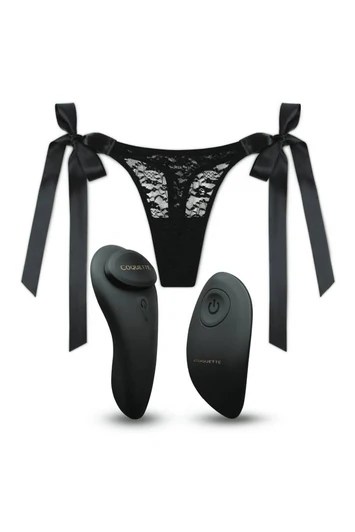
There’s a quiet trend growing in the world of adult exploration that sits somewhere between playful, psychological, and a little bit mischievous: wearable intimacy devices designed to be used while out in everyday life.
For some, it’s about technology meeting curiosity. For others, it’s about turning an ordinary day into something charged with anticipation, connection, and private excitement that nobody else can see — or guess.
And that hidden layer is exactly where much of the appeal lives.
Wearables in this space range widely, but the concept is similar: discreet devices designed to be worn under clothing, often controlled remotely by a partner or through pre-set patterns. They’re built to be subtle, silent, and private — creating an experience that exists in public but is known only to those involved.
For many couples, that contrast is the entire point.
There’s a playful psychological tension in going about normal life — shopping, socialising, having dinner, or attending an event — while carrying a private shared secret. The brain registers it as a kind of “dual reality.” On the surface, everything is ordinary. Internally, there’s anticipation, awareness, and a quiet sense of connection that only the couple understands.
That sense of shared secrecy can be surprisingly bonding.
Some couples describe it as a form of ongoing flirtation throughout the day. Instead of intimacy being confined to a bedroom or a specific moment, it becomes something woven into everyday life — a reminder of attraction, chemistry, and partnership even in the middle of mundane routines.
The attraction also ties into anticipation and loss of control in a safe, consensual way. Not control in a negative sense, but in the playful dynamic of surrendering a degree of awareness to your partner. That psychological shift — trusting someone else to create moments of surprise or stimulation — can heighten excitement and emotional connection.
There’s also an element of confidence involved.
For some, the idea of carrying that private experience while appearing completely composed in public can feel empowering. It’s a reminder that desire and everyday life don’t have to exist in separate worlds. They can overlap in subtle, consensual, and creative ways.
Of course, not all exploration is about intensity. For many couples, wearables are used in light, playful ways — a few minutes of laughter, teasing messages, or a shared moment of mischief during an otherwise ordinary day. It can be less about the device itself and more about the shared energy it creates.
Popular examples in this space often include compact wearable vibrators, remote-controlled couples’ devices, and app-connected toys that allow a partner to adjust settings from a distance. The technology has evolved significantly, making devices smaller, quieter, and more customizable than ever before, which has helped make them more appealing to curious couples who value discretion.
What’s interesting from a psychological perspective is how much of the appeal sits outside of the physical sensation itself. Anticipation, novelty, trust, and shared experience all play a major role. The mind often becomes the most active part of the experience — building excitement through expectation rather than immediate gratification.
There’s also a social element that shouldn’t be overlooked. For some couples in lifestyle communities, wearables can act as a bridge between private connection and social environments, adding a layer of shared energy while still maintaining boundaries and discretion.
As with many forms of adult exploration, it’s not about replacing anything in a relationship — it’s about adding dimension. Some couples try it once out of curiosity. Others incorporate it occasionally as part of their dynamic. And some simply enjoy the novelty before moving on to other forms of exploration.
What remains consistent is that communication, consent, and comfort are essential. The most positive experiences come from couples who are aligned, open, and respectful of each other’s boundaries.
At its heart, this trend isn’t really about technology or devices.
It’s about connection in unexpected places.
It’s about shared curiosity.
It’s about turning ordinary moments into something quietly extraordinary.
And for many, that’s where the real appeal lies — not in what anyone else can see, but in what only two people understand.


Leave a comment